Auto repair leads are the lifeblood of your shop’s growth. In a market where customers can compare prices, reviews, and turnaround times with a few clicks, relying on word of mouth alone leaves revenue on the table. That’s why the smartest owners blend multiple tactics, from sharpening local search engine optimization (SEO) to hosting community car care workshops, so they can attract new faces while keeping loyal customers engaged.
This guide provides practical steps you can start today to keep vehicles lining up at your service bays.
Auto Repair Lead Generation at a Glance
Generating high-quality auto repair leads involves optimizing local SEO, using targeted Google Ads, and managing online reviews to build trust. Effective strategies for getting more customers include, but are not limited to, utilizing platforms such as RepairPal, offering online booking, and running targeted local campaigns on social media to attract customers seeking immediate repairs.
Targeted Facebook ads can remind busy commuters that your team stands ready for routine maintenance during their lunch break. Platforms like RepairPal add third-party validation. Our certification badge signals fair pricing and ASE-certified technicians, helping you stand out from local competitors.
Want a deeper dive into the fundamentals? Check out this overview of getting more customers for your shop.
14 Auto Repair Lead Generation Strategies
Diversifying your approach protects your pipeline from seasonality, shifting algorithms, and changing consumer habits. Use the tactics below as modular building blocks; start with the quick wins that fit your current bandwidth, then adopt longer-term plays as your momentum and budget grow.
1. Google Ads
Paid search places your offer in front of drivers already searching terms like “oil change near me”. Set up tightly themed ad groups, write copy that highlights your unique value propositions — such as same day service, certified technicians, or transparent pricing — and point clicks to a landing page that makes scheduling effortless.
Track your top metrics in Google Analytics so you can spot which keywords generate the most profitable auto repair leads, then shift budget spend toward the winners. Common missteps include sending traffic to a generic homepage and forgetting negative keywords that waste budget on irrelevant searches.
2. Local SEO and Google Business Profile
When someone’s check engine light pops on, they pull out their phone. A well-optimized Google Business Profile helps your auto shop dominate those hyper-local searches. Make sure your NAP (name, address, and phone) is consistent across the web, sprinkle city-specific phrases like “car repair in San Antonio” throughout your site, and upload fresh photos each month. For a deeper technical checklist, review our local SEO tips for auto repair shops.
3. Google Local Services Ads (LSAs)
Google Local Services Ads appear above standard search results with your star rating, hours, and “Google Guaranteed” badge. Start by verifying your business, background checks, and insurance through Google’s onboarding. Set a weekly budget and choose services like brake repair or oil change to ensure only relevant leads come through. Measure success by tracking booked appointments and revenue per lead rather than clicks. Avoid the common pitfall of ignoring follow-ups; LSAs often deliver phone calls after hours, so route them to voicemail transcriptions or a call center to prevent missed opportunities.
4. Target Facebook Ads
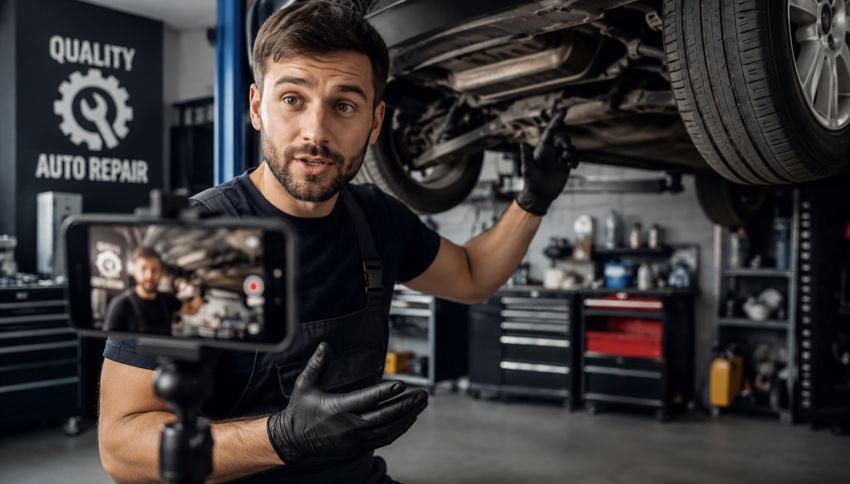
Social media marketing lets you target by ZIP code, vehicle ownership, or recent life events such as moving. Combine a short video of a brake repair in progress with an offer for a free inspection to stop scrollers mid-feed. Use Facebook’s “lead form” format so prospects can request an appointment without leaving the app. Review metrics such as cost per lead and appointment show rate weekly and pause ad sets that aren’t converting.
5. Strategic Partnerships
Partnering with complementary local businesses expands reach well beyond your own marketing channels. Start by listing potential allies: car dealerships, tire shops, car washes, or even real estate agents whose clients need trustworthy services after relocating. Propose a simple value swap, such as co-branded coupons or referral commissions. Track incoming referrals in your point-of-sale system to measure partner performance.
6. Webchat Support and Text-to-Lead
Live chat support offers immediate help to potential customers. Many customers prefer the convenience of live chat over phone calls or emails, as it provides quick answers to their questions. And these instant answers turn website visitors into booked appointments.
A lightweight chat widget pops up when a visitor lingers on your “Schedule Service” page, offering help with pricing or availability. Before launching, train staff on tone and response time standards, integrate a chatbot for after-hours questions, and sync the platform with your shop management system so chat leads flow directly into your calendar.
7. Customer Reviews
Reviews act as a digital word of mouth and influence both trust and search rankings. Positive feedback can significantly boost conversion rates by providing social proof while also nudging your site higher in search results, making it easier for new customers to find you.
Set up automated post-service texts with direct review links, thank every reviewer publicly, and resolve issues offline. Monitor patterns to spot training gaps. If multiple reviews mention long wait times, adjust staffing or appointment spacing. Aim for a steady cadence of new feedback each month, since recency often weighs as much as rating.
8. Customer Retention
Keeping loyal customers typically costs less than attracting new ones. Launch a mileage-based service club that bundles oil changes, tire rotations, and safety inspections for a flat monthly fee. Use your CRM to flag clients due for routine maintenance and send them a personal text or email with a scheduling link.
Measure retention by tracking visits per customer annually and average repair order value. Common mistakes include flooding inboxes with generic coupons instead of personalized reminders tied to the vehicle’s actual needs.
9. Brand Promotion and Reputation Management
A cohesive brand makes your shop memorable in a crowded auto repair landscape. Your brand represents your shop’s values, quality of service, and commitment to customer satisfaction. A well-promoted brand can attract more leads and make customers feel confident in choosing your products and services. Building a brand that resonates with your audience fosters loyalty and encourages word-of-mouth referrals.
Develop a logo, color palette, and tagline that reflect your values, then apply them consistently from web design to waiting room signage. Monitor social mentions so you can amplify praise and address criticism before it snowballs. Consistency signals professionalism and helps potential customers recall your name when their check engine light flashes.
10. Auto Care Workshops and Webinars
Hosting workshops and webinars positions you as an expert in auto care. These events help you connect with potential customers and build relationships by providing valuable information. Offering educational sessions can attract attendees who may become loyal customers. Workshops and webinars also offer opportunities to collect contact information, which can be used for follow-up marketing and lead nurturing. Sharing your knowledge and expertise fosters trust and encourages long-term customer relationships.
Promote events through local Facebook groups, community bulletin boards, and your email list. After the session, send attendees a summary PDF along with a coupon for their next oil change to encourage immediate bookings.
11. Referrals
Word of mouth remains a powerhouse. Create a simple program — like “Refer a friend, both get $25 off an oil change” — and promote it on invoices, webchat, and social posts. Provide referral cards at the front desk so happy customers can hand them out. Track referral codes in your POS to see which advocates drive the most revenue, then thank top referrers with annual perks like free detailing. A common mistake is forgetting to remind customers regularly. Include the offer in every post-service email to keep it top of mind.
12. Automated Reminders
Use SMS or email reminders to nudge customers about upcoming inspections, tire rotations, or routine maintenance. Start by integrating your shop management system with an automation platform, set intervals based on manufacturer recommendations, and personalize messages with the vehicle’s make and service due date. Measure success through appointment completion rates and declines in overdue services. Avoid sending reminders too frequently or without clear value, which can lead to opt-outs.
13. Content Marketing
Blogs, how-to videos, and seasonal checklists answer common questions and improve SEO. Plan content around real customer inquiries such as “Why is my steering wheel shaking?” or “When do I need a brake fluid flush?”
Publish at least twice a month, repurpose posts into short social snippets, and include a call to book service. Track organic traffic growth, time on page, and conversion rate to gauge impact.
14. Online Marketplaces (Such as RepairPal)
RepairPal connects you with customers looking for reliable auto repair services. Being listed on a trusted platform like RepairPal can significantly increase your shop’s visibility and attract more leads. While positive reviews on RepairPal enhance your shop’s reputation and encourage more customers to choose your services. Ensuring your profile is comprehensive and up-to-date helps potential customers find accurate information about your offerings. Leveraging online marketplaces can expand your reach and boost your credibility.
A listing on RepairPal also exposes your shop to drivers who value transparency and fair pricing. Complete every profile field, showcase ASE-certified technicians, and upload recent photos of your facility. Encourage happy clients to leave reviews; the added credibility often tips undecided prospects your way and feeds a continual stream of high-quality leads. Certified shops that optimize their marketplace profiles with detailed service descriptions and specialties can capture long-tail SEO traffic and convert new customers more efficiently.
What To Avoid When Seeking Increased Auto Repair Leads
Buying generic third-party lead lists might look like a shortcut, but it usually fills your inbox with drivers outside your service area, shoppers hunting for the cheapest deal — or, worst of all, outdated phone numbers. Chasing those cold contacts drains time you could spend attracting high-quality customers. Instead, focus on channels that let you target by proximity, vehicle type, or service need so every lead has a higher chance of rolling into your bay.
Equally risky is a “set it and forget it” mindset. Algorithms change, competitors tweak their Google ads, and your website score can slip if you ignore routine updates. This leads to poor mobile scores that frustrate visitors. Schedule monthly audits of your campaigns, refresh landing pages with seasonal offers, and review engagement data to make sure your lead generation engine keeps humming.
How RepairPal Helps Auto Repair Shops Generate Leads
Every tactic in this guide grows stronger when it’s backed by trusted third-party validation. That’s where we come in. We certify shops that meet rigorous standards for quality, transparency, and fair pricing. Once you’re certified, your profile appears in front of thousands of drivers who visit our marketplace each day specifically to find a repair facility they can trust.
Certification also amplifies the strategies you’re already running. A RepairPal badge boosts click-through rates on Google Ads, boosts credibility, and gives satisfied customers one more place to post rave reviews. Because our platform highlights specialties, amenities, and real-time pricing data, prospects arrive at your website pre-qualified and ready to book, saving you time and lowering your acquisition costs.
Want to generate more leads? Learn more about becoming RepairPal Certified.
FAQs About Auto Repair Leads
Below are answers to the questions shop owners ask us most often when they set out to strengthen their lead-generation game:
What Are the Main Types of Lead Generation Channels for Repair Shops?
Think of your channels in three buckets: paid (Google Ads and Google Local Services Ads), owned (your website, email list, and content marketing) and earned (customer referrals, online reviews, and marketplaces like RepairPal). A balanced mix ensures you’re visible whether drivers are actively searching “auto repair shop near me” or simply scrolling social media.
How Do Reviews Influence Auto Repair Leads?
Reviews act as social proof. Consistently high ratings raise your click-through rates on search results, improve local SEO standings, and reassure hesitant drivers that they can trust your service. Responding politely, especially to negative feedback, shows potential customers that you take accountability seriously.
What Role Does a Website Play in Generating Leads?
Your site is the digital front door to your auto shop. A fast-loading, mobile-friendly design with clear calls to schedule service converts curious visitors into booked appointments. Add webchat support, transparent pricing, and service descriptions to keep potential customers from bouncing to competitors with better websites.
What Is the Difference Between Organic and Paid Auto Repair Leads?
Organic leads find you through unpaid channels such as local SEO, Google Maps visibility, or social media content. Paid leads arrive via campaigns like Google Ads or LSAs where you pay per click or per lead. While paid channels deliver quick traffic, organic efforts build long-term authority and lower cost per acquisition over time.
How Can Auto Repair Shops Measure Lead Quality?
Track beyond raw form fills. Use tags in your point of sale system to note the lead source, then monitor metrics like show-up rate, average repair order value, and repeat visits. High-quality leads typically convert quickly, authorize recommended repairs, and return for routine maintenance.
Which Channels Generate the Most Consistent Leads Over Time?
Local SEO and a strong base of customer referrals provide the steadiest flow. Pair these with evergreen content marketing, such as seasonal maintenance tips, and you’ll maintain visibility even when ad budgets fluctuate.