Most drivers pick a repair shop the same way they pick a restaurant: they look it up first, and video is what convinces them. You don't need a camera crew or an ad budget, either. A phone, a bay, and a few minutes between jobs will do it. Here's how.
Auto Repair Video Marketing Quick Facts
Before the how, here's why video is worth your time:
- Video adoption is widespread: 91% of businesses now use video as a marketing tool, according to Wyzowl's 2026 survey. If your shop isn't one of them, a competitor down the road probably is.
- Video influences purchases: 85% of people say watching a video has convinced them to buy a product or service.
- Video is a preferred format: Asked how they'd prefer to learn about a product or service, 63% choose a short video over reading about it.
Why Is Video so Effective for Auto Repair Shops?
Auto repair runs on trust, and trust is exactly what's hardest to communicate. Drivers worry about being upsold or overcharged, mostly because they can't see the work. Video closes that gap. It shows your face, your shop, and how you explain things before anyone hands over their keys.
It also fits the product. Repairs are physical and visual: a worn brake pad held next to a new one makes the case in ten seconds, and no paragraph can. When something breaks, drivers search the symptom — video is often what they find first.
4 Effective Video Types for Auto Repair Shops
You don't need all four at once. Pick the one that feels manageable, get a few reps in, then add the next.
1. Customer Testimonial Videos
Nothing beats a real customer saying your shop treated them right. The easiest moment to film this type of marketing asset is at pickup. Thirty to sixty seconds on a phone is plenty. Ask them to cover:
- What brought them in (the problem, or the shop they left)
- How the job went (think: communication, timeline, final price versus the quote)
- Whether they'd come back
Skip the script. A real person who's slightly uncomfortable on camera is more convincing than a polished delivery, because it's obviously not an ad. Just get a quick signed release before posting.
2. Technician Introduction Videos
For most drivers, the uncomfortable part of auto repair is handing the keys to a stranger. Short intros fix that. Sixty to ninety seconds per tech: name, years turning wrenches, certifications like ASE, what they drive, the jobs they like best.
Customers start asking for techs by name, which is a level of loyalty advertising can't buy. These clips pull double duty, too: good techs looking for their next shop notice a place that puts its people on camera.
3. Repair Explanation and "How-To" Videos
Film the explanations you already give at the counter: why brakes squeal, what a diagnostic fee actually covers, how to check oil and coolant, what that dashboard light means. These videos do two jobs.
- Matches search intent: They match what drivers actually type into search.
- Builds trust: They position you as the shop that explains instead of upsells.
Don't worry about teaching people to skip you. The ones who fix it themselves were never booking anyway. Plus, when a job is over their head, they call the person who taught them something.
4. Shop Tours and Behind-the-Scenes Videos
Plenty of people still picture repair shops as dark, greasy, and unwelcoming. A two-minute walkthrough — the bays, the lifts, the diagnostic equipment, the waiting area — quietly kills that image before they ever visit.
Behind-the-scenes clips work even when they're mundane (think: a seized bolt finally breaking loose, a throttle body before and after cleaning, the morning lineup of cars). It reads as honest footage of real work, and it's the easiest content on this list because the shop makes it for you.
How To Turn One Repair Job Into Multiple Video Marketing Assets
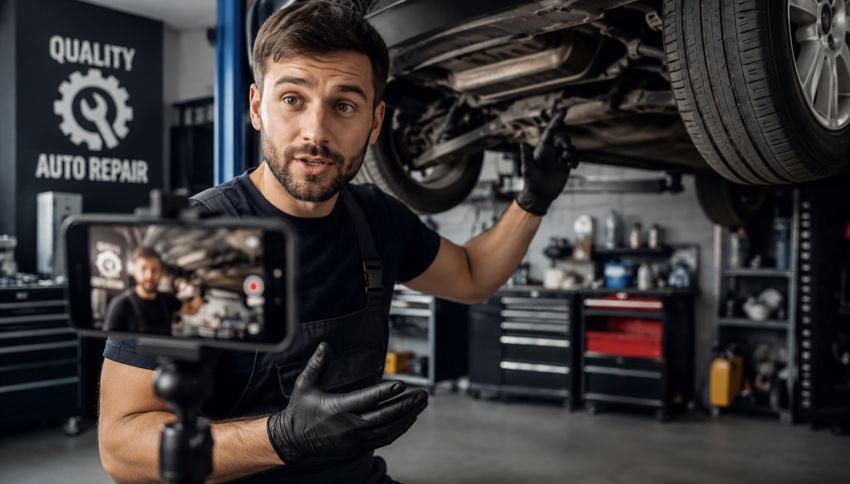
You don't need to film something new every week. Film one interesting job well. Prop a phone on a toolbox and capture the diagnosis, the worst of the damage, the fix, and two minutes of the tech explaining it.
That one afternoon of footage becomes a month of content:
- Long-form YouTube videos: The full walkthrough, five to ten minutes. YouTube works like a search engine, so a video on a common failure in a common model keeps pulling viewers for years.
- YouTube Shorts: Vertical clips up to three minutes. Pull the single best moment (the diagnosis reveal, the before-and-after) and let the Shorts feed show it to people who've never heard of you.
- Instagram Reels: The same vertical clips, also capped at three minutes. This is where local customers scroll, so add on-screen text; most people watch with the sound off.
- Landing page embeds: Put the walkthrough or a testimonial on the matching service page (brake video on the brake page), so visitors get proof at the exact moment they're deciding.
- Paid social ad creative: When one clip clearly outperforms the rest, put money behind it. Real shop footage reads as real, and you already know the ad works before you pay for it.
Where Should Auto Repair Shops Publish Their Videos?
Start where drivers already find you: your Google Business Profile and your website. You likely want to put YouTube in that list, too. Then pick one social channel your customers actually use and post there consistently. Two channels done weekly beat five done never.
How To Measure the Success of Your Video Marketing Strategy
Most platforms show these numbers for free in their analytics tab, each letting you track a video's success:
- View count: How many times a video has been watched. Each platform counts a view a little differently, so compare within a platform, not across them.
- Watch time: The total minutes people have spent watching your video. Platforms reward high watch time with more reach.
- Audience retention: The percentage of each video viewers stick around for, and the exact point where they drop off.
- Engagement rate: Likes, comments, shares, and saves measured against views. It shows a video resonated rather than just appeared.
- Click-through rate (CTR): The percentage of people who clicked your link or thumbnail after seeing it.
- Conversion rate: The percentage of viewers who took the action you wanted (booked, called, or requested an estimate).
- Follower growth: Net new followers over time. A rough count of people who want to hear from your shop again.
Start Growing Your Customer Base
Video earns trust one viewer at a time. RepairPal Certification scales it. Certified shops are introduced to drivers already searching for a shop they can trust on repairpal.com and through partners like CarMax and USAA. These are customers who spend $800–$1,000 on average per visit.
Learn more about becoming RepairPal Certified.
FAQs
How To Use Video for Marketing?
Film what already happens in your shop (repairs, explanations, happy customers) on a phone. Post consistently to Google, your website, and YouTube, and pick one social channel. Keep videos short and honest, and end them with a simple next step (like booking an inspection).
How Do I Get More Customers in My Auto Repair Shop?
Make your shop easy to find and easy to trust. That means a complete Google Business Profile, steady reviews, videos that show your people and your work, and referral networks like RepairPal that put you in front of drivers already searching.
Common Auto Repair Video Marketing Mistakes to Avoid
The big ones: waiting for perfect equipment instead of starting with a phone, drowning viewers in jargon, turning every video into a sales pitch, and quitting after three posts. Don't ignore comments, either. The people asking questions under your videos are often your next customers.