
Learn how auto repair shops can use Google Analytics to improve SEO, track traffic, and turn website visitors into new customers.
Why SEO + Analytics Work Together
If you’ve ever wondered why your shop shows up on Google one week but drops the next, the answer usually comes down to SEO performance. Search engine optimization (SEO) is how customers find your shop online. But here’s the catch: you can’t improve SEO if you don’t know what’s happening behind the scenes.
That’s where Google Analytics (GA4) comes in. It’s like a free “check engine light” for your website—telling you where your traffic comes from, what’s working, and what needs a tune-up.
Why Google Analytics Is Essential for SEO
SEO isn’t just about adding keywords into your website. It’s about creating an easy online experience that helps customers find and choose your shop. Google Analytics helps you:
- See how people find you (search, referrals, ads).
- Measure keyword performance (which services bring in visitors).
- Track engagement (are customers sticking around or bouncing?).
- Spot website problems early (slow mobile site, missing pages).
Without GA4, you’re basically guessing how your customers are finding you and what they are searching for. With GA4, you’re working with data to help customers find your auto repair shop.
Step 1: Track Your Traffic Sources
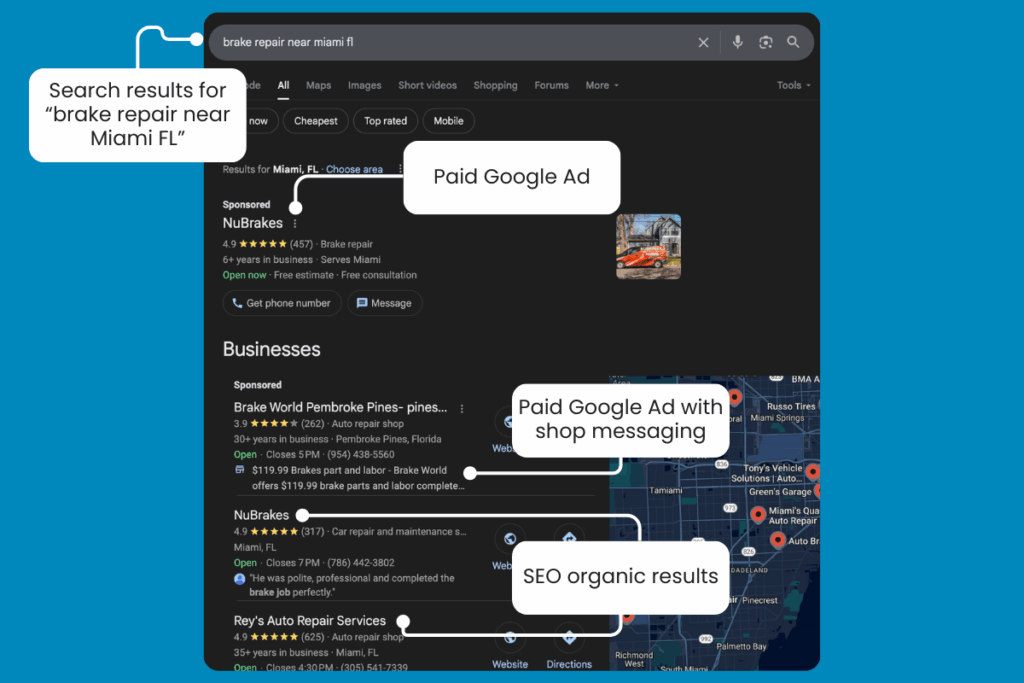
The first thing GA4 shows you is where your visitors come from. For SEO, the most important source is Organic Search—that’s customers finding you through Google without paid ads.
Why it matters:
- If organic search is low, it means your shop isn’t ranking well in search results.
- If most visitors come from referrals (like Facebook), you may need stronger SEO to show up in local searches.
Pro tip: Compare organic traffic vs. paid ads each month to see where your marketing dollars make the most impact.
Step 2: Check Which Pages Get the Most Traffic
Not all pages are going to get the same traction. GA4 tells you which pages people land on most often.
For auto repair shops, common high-traffic pages are:
- Homepage
- Services pages (brakes, oil changes, tires)
- Appointment booking page
- Blog posts (like seasonal maintenance tips)
Why it matters for SEO:
- If your brake repair page gets lots of views, make sure it’s optimized with local keywords:
- “Brake repair in [Your City]”
- “Affordable brake service near [Your City]”
- Add Call-to-actions (CTAs) like: “Schedule your brake inspection today.”
Pro tip: If a page isn’t ranking high on the results first page, update it with fresh content and local keywords.
Step 3: Measure Bounce Rate & Engagement
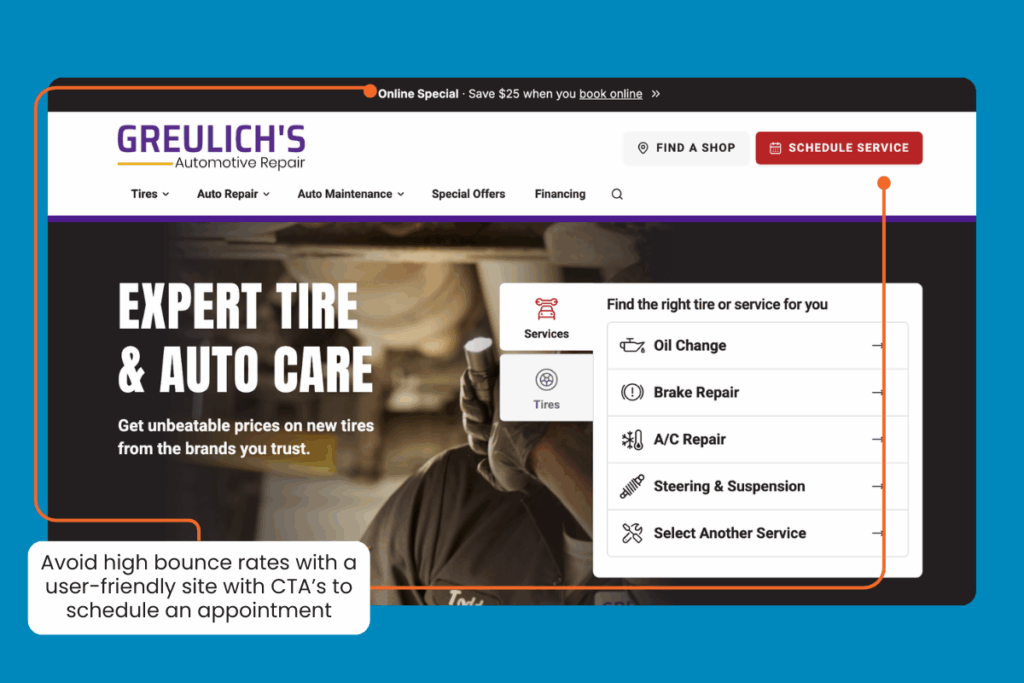
A high bounce rate (people leaving after one page) is an indicator that there is trouble with your website. Maybe your page loads too slowly, or the content isn’t what they expected.
Why it matters for SEO:
- Google sees bounce rate as a sign of poor user experience.
- Lower bounce rates = better SEO rankings.
How to improve:
- Speed up your site (compress images, fix slow plugins).
- Make sure your title and content match what people search for. Example: If your page is titled “Oil Change Flint MI,” it should immediately talk about oil changes—not your full shop history.
- Add clear buttons like “Book Your Oil Change Now.”
Step 4: Track Conversions from Organic Search
SEO isn’t just about traffic—it’s about turning visitors into customers.
In GA4, set up conversions for:
- Phone clicks
- Appointment bookings
- Contact form submissions
Why it matters:
- If 500 people visit your site but only 2 book an appointment, you know your SEO may be bringing traffic but not quality leads.
- If your conversions are strong, double down on the keywords and pages that are working.
Pro tip: Use call tracking numbers on your website to tie calls directly back to SEO traffic.
Step 5: Look at Location Data
For auto shops, SEO is local SEO. You don’t just want any traffic from around the world—you want traffic from customers in your area.
Why it matters:
- GA4 shows you where visitors are located.
- If most of your traffic is from outside your service area, you’re attracting the wrong audience.
How to improve:
- Add your city and nearby towns into service page copy.
- Keep your Google Business Profile updated with hours, photos, and services.
Step 6: Use Search Queries to Find SEO Gaps
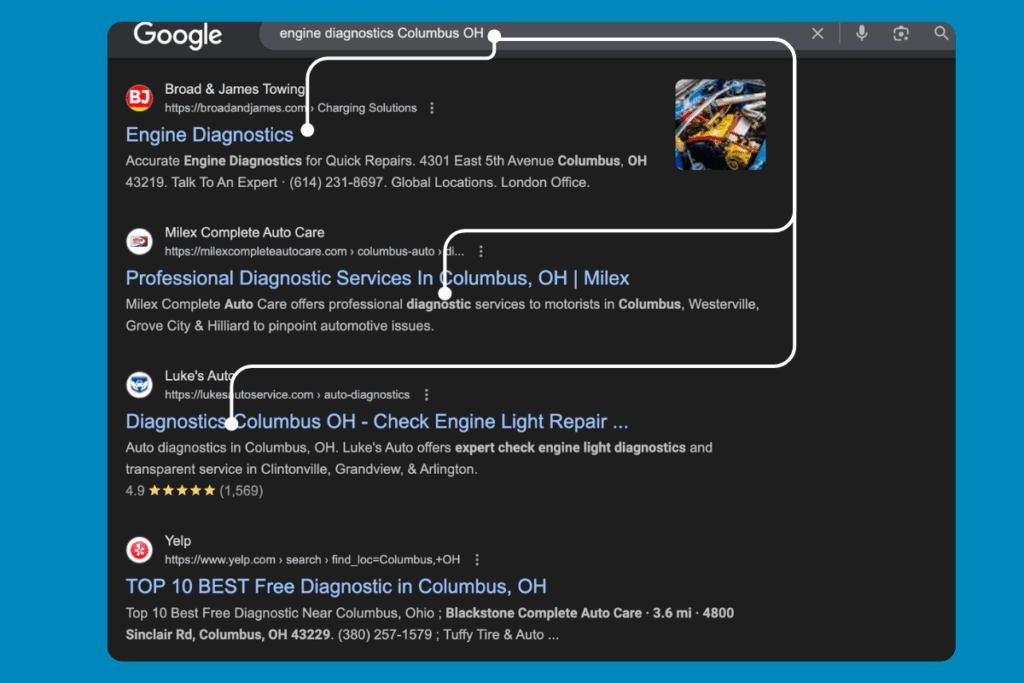
GA4 connects with Google Search Console, which shows the exact keywords people use to find your shop.
Why it matters:
- If customers search “engine diagnostics Columbus OH” but you don’t have a page for that, you’re missing leads.
- Long-tail keywords (like “affordable tire rotation near me”) are especially important for local shops.
Pro tip: Build blogs around these search queries to capture more traffic. Example: “5 Signs You Need Engine Diagnostics in [City].”
Step 7: Keep Testing & Updating
SEO isn’t set-it-and-forget-it. Just like car maintenance, it requires ongoing work. Use Google Analytics monthly to:
- Track organic traffic growth.
- Compare year-over-year trends (seasonal dips are normal).
- Update underperforming pages.
- Create new content around top-performing services.
Real Example: Fixing an Underperforming Page
Let’s say your “Tire Services” page has:
- 300 visits a month
- 90% bounce rate
- Only 1 conversion
That’s a red flag. Here’s what GA tells you:
- Customers are interested in tires (good traffic).
- But they don’t see what they need (high bounce rate).
- They aren’t booking (low conversions).
Fixes:
- Add local keywords like “Tire Services in [City].”
- Include pricing or promotions (e.g., free tire rotation with brake service).
- Add a bold “Book Tire Service Today” button.
Make necessary adjustments. Then, check to see if your bounce rate drops, conversions increase, and SEO rankings over time.
FAQs
Not directly—it provides insights that help you take the right actions to boost SEO.
At least once a week. More often if you’re running campaigns.
It depends. Some shop owners can handle the basics. For deeper SEO strategies, you may want outside help.
Conversions. At the end of the day, SEO is about turning website visits into paying customers.
Improve Your Auto Repair Shop SEO With Data
Google Analytics gives you the story of how customers find and use your website. By paying attention to SEO-related data like traffic sources, bounce rate, and conversions, you can fine-tune your site, rank higher on Google, and attract more customers to your bays.